
In a dramatic escalation ahead of a pivotal Supreme Court hearing, Norway’s ambassador to Pakistan made an unannounced appearance at the apex court today, meeting human rights lawyer Imaan Zainab Mazari-Hazir amid her ongoing trial over controversial social media posts. The move has ignited a firestorm in diplomatic, legal, and political circles, with critics decrying it as a blatant breach of protocol and a potential threat to Pakistan’s judicial sovereignty.
The incident unfolded as a three-judge bench, led by Justice Hashim Kakar and including Justices Salahuddin Panhwar and Ishtiaq Ibrahim, prepared to hear Mazari’s urgent petition seeking a stay on her lower court trial.
Mazari, daughter of former federal minister Shireen Mazari, and her husband, advocate Hadi Ali Chattha, face charges under the Prevention of Electronic Crimes Act (Peca) for allegedly inciting linguistic divisions and defaming the armed forces through tweets questioning enforced disappearances.
The couple has challenged the trial proceedings, citing due process violations and a lack of confidence in Additional Sessions Judge Muhammad Afzal Majoka, who recently rejected their acquittal pleas.
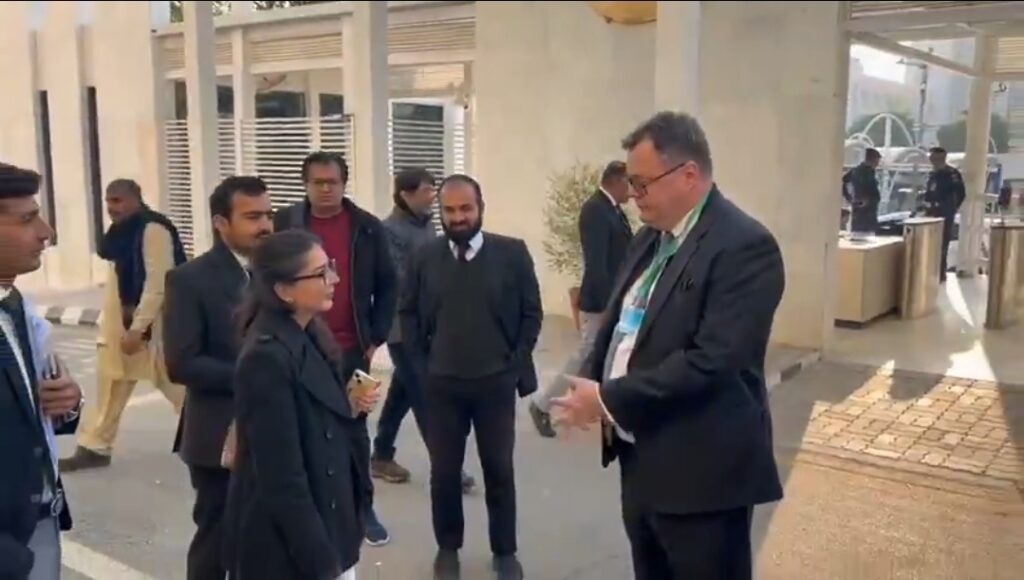
Eyewitness accounts, captured in a widely circulated video posted by journalist Saqib Bashir, show the Norwegian envoy entering the Supreme Court premises and engaging in a private conversation with Mazari. The footage, which has racked up thousands of views on social media, depicts the ambassador in formal attire, shaking hands with Mazari outside the courtroom—a scene that has fueled speculation about foreign involvement in a sensitive domestic case.
Legal experts swiftly condemned the visit as a “clear violation of diplomatic norms.”
“Under the Vienna Convention on Diplomatic Relations, ambassadors are expected to respect the host country’s internal affairs, including judicial independence,” said Islamabad-based constitutional lawyer Salman Safdar. “Direct intervention, even observational, in ongoing proceedings risks being perceived as undue pressure and meddling.” He warned that such actions could erode public trust in the judiciary and invite reciprocal diplomatic tensions.
Government sources, speaking on condition of anonymity, expressed alarm over the implications. “This isn’t routine consular support; it’s an overt signal that crosses red lines,” one senior official told reporters. The Foreign Office has yet to issue an official statement, but insiders hint at a formal protest being prepared. The timing—mere hours before the SC hearing—has amplified concerns, with some analysts linking it to Mazari’s vocal advocacy on human rights issues, including Balochistan disappearances, which have drawn international scrutiny.
Political and civil society voices echoed the unease. “This sets a dangerous precedent for foreign envoys treating our courts like international forums,” tweeted prominent analyst Asad Latif Khuhro. Human rights groups, including Amnesty International, have previously called for dropping the charges, labeling them an assault on free expression.
Norwegian officials have not commented, but the episode underscores growing frictions in Pakistan-Norway ties, strained by broader human rights dialogues.
The hearing’s outcome remains pending, but today’s events have thrust the case into the global spotlight, raising urgent questions about the boundaries of diplomacy in Pakistan’s fractious legal landscape.