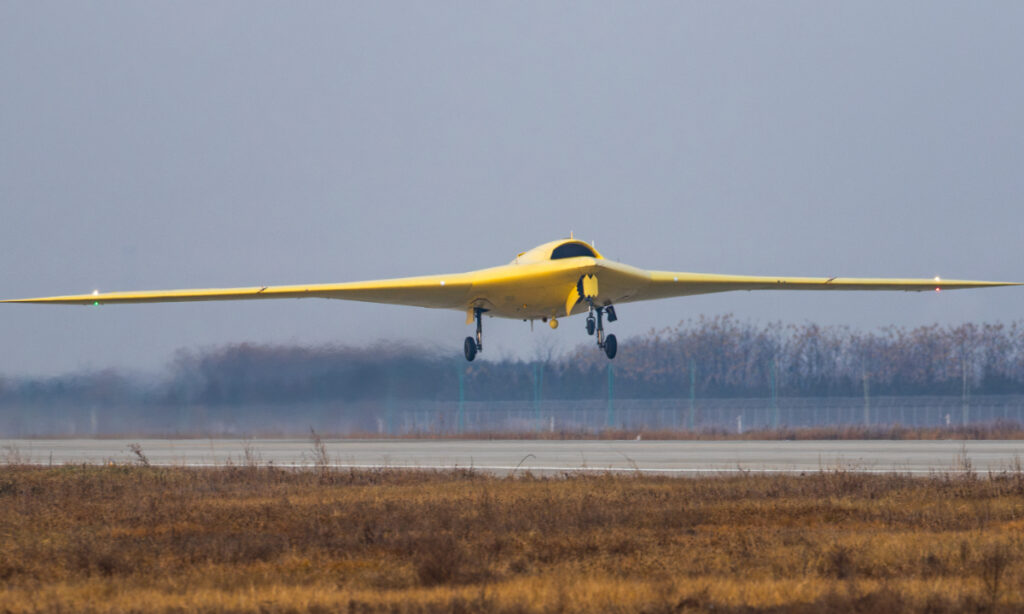

China’s advanced CH-7 high-altitude, long-endurance stealth unmanned combat aerial vehicle (UCAV), developed by the China Aerospace Science and Technology Corporation (CASC), has successfully completed its maiden flight at an airfield in northwest China, marking a significant milestone in the nation’s unmanned aviation capabilities.
The flight, confirmed by CASC’s 11th Academy, validated the drone’s basic performance, including autonomous takeoff, landing, attitude control, and trajectory tracking. Developers described the test as “highly successful,” aligning with design specifications.
The CH-7, also known as Caihong-7 or Rainbow-7, features a sleek flying-wing layout optimized for low observability, high cruise speeds, extended endurance, and advanced payload integration. It is designed for roles in persistent reconnaissance, early warning, electronic warfare, and potential strike missions in high-threat environments.
First unveiled as a mockup at Airshow China in 2018, the CH-7 has undergone refinements, including adjustments for enhanced informatized warfare capabilities. Experts note its subsonic speed makes it suited for strategic support rather than close-combat wingman roles alongside fighter jets.