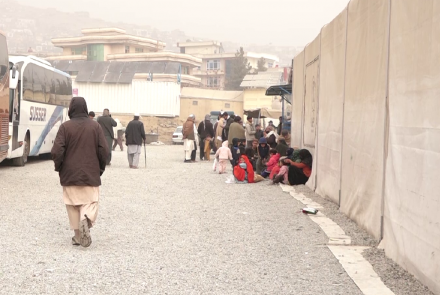

As the forced deportation of Afghan migrants from Iran and Pakistan continues, several returnees housed in a migrant camp in Kabul have voiced their criticism of the Pakistani police’s mistreatment, stating that all their possessions were left behind in that country.
Providing shelter, distributing land, offering cash assistance, and creating job opportunities are among the most urgent demands of these returnees.
Jan Mohammad, a returnee from Iran, told: “The Islamic Emirate of Afghanistan must help these people; they have no place to live. I myself am heading to Jawzjan province and have nowhere to stay.”
On the other hand, some deported migrants from Pakistan say they returned empty-handed, having lost all their property and belongings.
They are urging the Islamic Emirate authorities to provide shelter, emergency aid, and employment opportunities.
Jamaluddin, deported from Pakistan, stated: “We were forcibly expelled; some of our belongings remained there. Here, we have neither money nor shelter. The problems are overwhelming; it’s cold, and winter has arrived.”
Gulzar, another deportee from Pakistan, told: “We were expelled. That country was foreign. Now we’ve returned to our homeland and I call on the Islamic Emirate to support us.”
Meanwhile, Iran’s representative to the United Nations criticized the international community, stating that it has failed to meet even its basic commitments to support millions of Afghan migrants.
According to Iranian media, Amir Saeed Iravani said international financial aid for 2026 has been reduced by 60%.
He added that Iran cannot bear the heavy burden of hosting six million Afghan nationals on its own, and this situation violates the principle of global responsibility-sharing.
Part of the Iranian media report reads: “Iran has repeatedly warned the United Nations and donor countries that without substantial and sustained support, it cannot endure these pressures. The severe reduction in aid violates the principle of shared responsibility for refugees. We have clearly and repeatedly stated from this very platform that Iran cannot and will not carry the disproportionate burden of hosting over six million Afghan nationals without real international solidarity, fair responsibility-sharing, and tangible financial support.”
Nazer Nazari, a migrant rights activist, stated: “It is essential that the Islamic Emirate of Afghanistan adopt a comprehensive strategy, including an immediate halt to deportations during the winter and the creation of a joint program with international agencies for the temporary resettlement of migrants.”
Abdul Razaq Adil, another migrant rights activist, said: “The Afghan migrant crisis is not just a security, economic, or purely humanitarian issue it is a regional development crisis. Until Afghanistan’s economic and security situation improves, migration will continue, and neighboring countries like Iran and Pakistan will remain the main hosts due to geographic proximity.”
According to the High Commission for Addressing Migrant Affairs, just yesterday, 830 families returned to Afghanistan, 979 families were relocated to designated areas, 636 families received aid, and SIM cards were distributed.