
Major (R) Haroon Rasheed is a Defense and Strategic Analyst specializing in South Asian military dynamics, deterrence strategy, and defense modernization. He is a member of the Research and Evaluation Cell for Advancing Basic Amenities and Development (REC ABAD).
After the fall of Dhaka in 1971, Bangladesh emerged victorious but deeply unstable. The new state was facing armed groups, ideological conflicts, and a collapsing law-and-order system. In early 1972, the government under Sheikh Mujibur Rahman created a special paramilitary force: the Jatiya Rakkhi Bahini, often called simply the Rakkhi Bahini.
Although it was presented as a security force meant to restore order, it quickly grew into a feared instrument of political control. Its loyalty was tied directly to the ruling party, and it operated above normal legal oversight. Over time, it was accused of torture, forced disappearances, extrajudicial killings, sexual violence, and intimidation of student activists and political opponents.
Farhan Saeed Praises Talha Anjum’s Indian Flag – Social Media Loses It
Deadly Tejas Accident Exposes Long-Standing Crises in India’s Defence Aviation
Trump meets Zohran Mamdani at White House, offers warm praise
For more such Opinions & Blogs, click here.
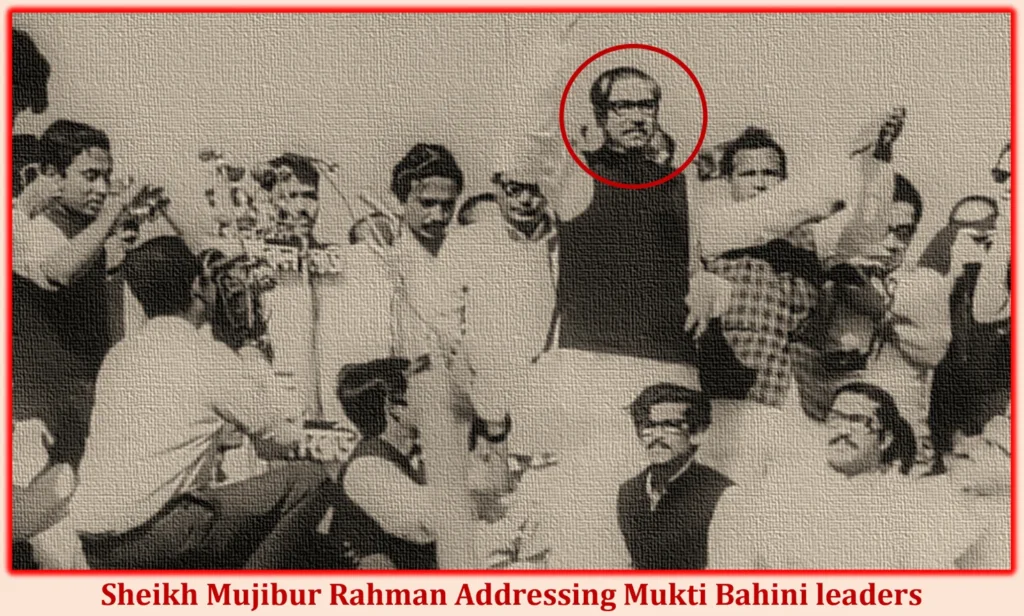
Unlike the Mukti Bahini, the freedom fighters who fought for independence, the Rakkhi Bahini became associated with internal repression rather than national liberation. Many nationalist and pro-Bangladesh voices felt sidelined or silenced.
This force left a deep scar on the nation’s memory and set a precedent: that political power could be protected through force rather than democratic legitimacy.
India’s Heavy Presence After 1971
India’s decisive role in Bangladesh’s liberation is widely acknowledged. But after independence, India’s political and strategic influence remained extremely strong. Critics argued that Dhaka’s leadership leaned too heavily toward New Delhi, resulting in a sense of dependency.
While India did not directly command the Rakkhi Bahini, many Bangladeshis believed that the centralization of power and suppression of dissent indirectly strengthened India’s political hold over the young nation.
Whether fully accurate or partly perception, this sentiment shaped political discourse for decades. It also contributed to a divide between those seen as “India-aligned” and those who identified as more independent nationalists.
By-election in 6 NA, 7 PA constituencies on Sunday
Asia Cup Rising Stars Final b/w Pakistan Shaheens, Bangladesh-A on Sunday
Mainly cold, dry weather likely to prevail over most parts
2024: When Students Said “Enough
Half a century later, the echoes of the past reappeared on the streets of Dhaka, Chittagong, Rajshahi, and other cities.
In 2024, student groups launched massive demonstrations due to frustration over corruption, unemployment, and a controversial quota system that favored political loyalists. These protests quickly evolved into a nationwide movement demanding accountability, fair governance, and freedom from political fear.
The government’s response, however, was severe. Security forces—including police, paramilitary units, and ruling-party supporters—were deployed to crush the protests. Universities were raided, hostels attacked, and student leaders arrested or disappeared.
The United Nations Human Rights Office conducted an extensive investigation and concluded that the crackdown involved widespread killings, torture, illegal detentions, and coordinated attacks on unarmed youth. The report stated that there were “reasonable grounds to believe” crimes against humanity had been committed.
The estimated 1,400 deaths sent shockwaves through Bangladesh and the international community.
The Trial of Sheikh Hasina
In 2025, a special tribunal in Dhaka delivered a historic verdict:
- Sheikh Hasina Wajid was guilty of crimes against humanity and was sentenced to death in absentia.
- Her former Home Minister received the same punishment.
While many Bangladeshis celebrated the verdict as long-awaited justice, others questioned whether the trial was politically influenced or whether Hasina received a fair chance to defend herself. Human rights groups welcomed the accountability but expressed concern about the use of the death penalty and the speed of the proceedings.
Hasina, speaking from abroad, dismissed the judgment as “politically engineered” and “unjust”. But the strength of the UN findings cannot be ignored.
French commander confirms India’s Rafale jets shot down by Pakistan in May clash
IAF faces backlash after Tejas jet crash in Dubai; calls grow for Air Chief’s resignation
CCP Targets Schools for Forcing Costly Branded Supplies
Why the Past Still Matters
The indictment of Sheikh Hasina cannot be viewed separately from Bangladesh’s wider history. From the Rakkhi Bahini of the early 1970s to the events of 2024, one pattern repeats: the use of state power to silence dissent.
This legacy has haunted Bangladesh for generations. It has created cycles of distrust, revenge, and political violence—no matter which party has ruled.
The fall of Hasina, therefore, is not just the collapse of a political dynasty. It is a reminder that Bangladesh has long struggled with the dangers of unchecked power.
A Moment of Choice
Bangladesh now stands at a crossroads. The country can either fall back into more political vengeance—or it can choose to break the old cycle.
To truly move forward, Bangladesh will need:
- Stronger democratic institutions
- Independent courts
- Transparent security forces
- And a political culture that respects disagreement rather than punishes it
The indictment of Sheikh Hasina is a turning point. It can be the start of a new era if Bangladesh chooses justice, accountability, and humane governance over fear and force.
For more such Opinions & Blogs, click here.
T20 World Cup 2026: India and Pakistan Drawn in Same Group; ICC Finalises Tournament Pools
Atif Aslam Addresses Claims He Charges High Fees for Interviews
Eminem Sues Australian Brand “Swim Shady”
Indian Tejas Fighter Jet Crashes During Dubai Air Show; Pilot Killed
Major (R) Haroon Rasheed is a Defense and Strategic Analyst specializing in South Asian military dynamics, deterrence strategies, and defense modernization. He is a member of the Research and Evaluation Cell for Advancing Basic Amenities and Development (REC ABAD).
Stay tuned to Baaghi TV for more. Download our app for the latest news, updates & interesting content!